Saturday, 6 May 2017

Off-Road Motorcycle Riding Tips


"Things to Keep in Mind before your first Motorcycle Road Trip"

It’s exciting to see more & more people starting to ride motorcycles and going on roadtrips either on their own or with buddies. Mostly when people start riding, they may know very little about how to start riding comfortably on slightly longer roadtrips apart from just the city riding. As they continue riding, they make more & more like minded riders & learn a lot from them & their riding style. This little compilation is aimed to help those who are just starting out & is from a personal learning & perspective of a relatively new long distance motorcyclist so should be helpful.


Choose your beast:


Whatever kind of bike you choose, you must always be comfortable on it. In case you zero in on a bike that needs certain modifications to ensure it’s comfortable for you to handle, get it done immediately. Some common changes that riders make is getting a different handlebar, a more comfortable seat, guards, better headlights if they are going to do lots of evening riding, a new exhaust, etc. Remember, it’s not just about looking cool on the bike, but also riding it well.


Your Physical Fitness :


The preparation for this ride is mostly mental as those conditions cannot be experienced in Hyderabad or other plain areas.  The key is to study what you are going to face and be mentally prepared for it. (Read about Thailand story on Endurance here) Also i would recommend taking up stamina building activities before your trip. The trip requires a lot of effort if you are going on a bike and my advice is to try and build stamina as the conditions on the trip demand a lot of energy. Doe to the high altitude, there are chances of Acute Mountain Sickness (AMS). AMS affects our body due to low oxygen levels and makes our body difficult to adjust and adapt to the weather and height. Headache, vomiting, nose bleeding, nausea, breathlessness are common side effects.

Dress to Ride :


For long distance riding, always try & wear riding pants, ankle boots (safety shoes can be a substitute), riding jacket & of course a full face helmet. Or there is the option of knee & elbow guards or body armor. Motorcycling gear can easily be bought online or in moto stores. Try to get as close a size as possible, lose & baggy gear or clothing will only be a disturbance & cause discomfort. When completely geared up, you might feel heavy & awkward at first, but once you get on the bike, knowing that you are riding safer will make your riding more fun & give you greater confidence. Plus you get more of the biker feel on a lighter note.

Helmets : 


Gear can even help when it’s hot, by better allowing your body’s natural evaporative cooling effect to take place. Under constant wind blast, the sweat is blown off your skin too quickly for it to have a cooling effect. Put on a (summer) jacket, helmet, boots, gloves and pants, however, and your body is free to cool itself as designed.

Luckily, mankind has achieved through science what evolution has failed to provide: clothing that protects you from accidents and the elements, and makes riding an easier, more comfortable experience.


Helmets typically have a five-year life. After that, the glue and whatnot used to bond layers of the EPS impact absorption material (precisely tailored densities of Styrofoam) may begin to degrade, impacting safety.


The shape and size of every person’s head is unique. You need to find a helmet that fits you perfectly; sizes and shapes vary heavily between manufacturers and models. To determine your shape and size, visit a large brick-and-mortar retailer and try on every helmet you can. You’ll know one fits when it evenly holds your head all the way around, with no pressure points. Put it on, grasp the chin and try to rotate the helmet while resisting the movement with your head. The helmet shouldn’t be able to rotate independently of your scalp. It should fit snugly, but not be too tight. 

Jackets :


You want the jacket to fit snugly but leave your arms free to articulate fully. Consider the style of bike you ride and choose a jacket cut to work in its riding position. For example, Sportbikes require you to hunch over, requiring some extra articulation for a jacket to be comfortable on them.


Then, think about what kind of weather you’ll most frequently be riding in. Jackets made from mesh, perforated leather, or with lots of zip-open vents are good for warm weather but not the cold or wet, and vice versa.
Some jackets feature zippers around the bottom, enabling them to connect to a pair of riding pants – forming a suit. Doing so better seals out the elements and helps the whole thing stay on in a crash, but those zippers often require matching tops and bottoms from the same company – sized correctly – to work.

Pants :


Regular denim jeans will not protect you in a motorcycle accident.
Jeans that are either made from or include Kevlar panels offer slightly more abrasion resistance, but are still a compromise, offering nothing like the protection of a true pair of riding pants.


Like jackets, pants are available in leather or textile materials and should be equipped with CE-rated armor in the hips, shins and knees. They should fit snugly, but be comfortable and allow full leg articulation. Try them on a bike, or stand in a riding position close to that of your own to determine if they’ll work.

Boots :


Most street bikes weigh more than 350 pounds. Frequently, they’re much heavier. You’ll need to support that weight and your own through your legs, ankles, and feet on slippery, uneven, unpredictable surfaces. For that reason alone, a sturdy pair of boots with oil-resistant, non-slip soles and good ankle support should be considered a minimum.


Your feet and ankles are also vulnerable in a crash, so you’ll want to protect them. To see what will happen to your feet in a crash in a given pair of footwear, grasp them by the toe and heel, then twist. If the result doesn’t look like your foot would survive intact, then it probably won’t.

Gloves :


Your hands are an awesome combination of extreme fragility combined with utter necessity. You need them to do stuff and they’re also the first thing to touch down in any crash. So you need to protect them. 


Motorcycle gloves should fully cover your fingers, palm, the back of your hands and your wrists. There should be significant overlap between glove and jacket so that you never see any skin exposed between the two.


Pack your luggage:


There’s a brilliant range of motorcycle luggage available in the Indian market to choose from- starting from metal to soft textile luggage. There are saddle bags that you can harness on the back seat of your bike, tank bags which magnetically hug your tank & can carry lighter stuff, tailbags that can be bungeed to the back seat, etc. These too are available online or in moto stores & come in different sizes & styles to suit your bike kind. When packing, make sure to carry as much disposable stuff you can which can be used & discarded. This will help you cut down on a lot of weight as you travel. Eg – instead of shampoo bottles, carry sachets; carry small soap bars, disposable toothbrushes which you can do away with on your ride back. Don’t unnecessarily carry a lot of changes of clothes, instead try & wash & reuse your clothes. My favorite motorcycle luggage comes from Dirtsack in India. Give the DSLR a miss & carry a digicam if you have one, which can be put in your pocket instead of packing it up in the luggage & taking it out every time you want to take some photos. Don’t fold your clothes – roll them, they take up less space that way. Essential medicines are a must.


Medical Kit :


A medical kit with tablets for headache, cold, fever, muscle and joint pains etc. I will recommend to carry glucose packets as well.

  • ORS or ORS-L Tetra Packs at least 5 in number
  • Pain Relief Spray
  • Pain Relief Cream or Gel
  • Betadine – Antiseptic cream
  • Savlon or Dettol – Antiseptic solution
  • Combiflaim or Flexon – Pain Killers
  • Crocin or Paracetamol – Mild Fever
  • Avomine – Relief from Dizziness, Motion Sickness and Vomiting
  • Digene – Relief from Flatulence, Indigestion, acidity (mild)
  • Zinetac 150mg – Acidity or gastric problems (only if severe)
  • Eno Sachets – Quick Gastric Relief
  • Entroquinol – Relief from Loose motion (mild)
  • Metrogyl – Relief from Loose motion (high)
  • D-Cold Total or Vicks Action 500 for cold
  • Pudin Hara for stomachache
  • Crepe Bandage – 2 (for fractures)
  • J&J Band-Aid Fast Heal Wash proof – Long, Square and circle patches
  • Cotton and Dressing Bandage
  • Becosules for vitamin B-complex and sometimes energy
  • Eye Tone for soothing eyes

Knowledge of Route:


Not all of us are genius with directions & remembering roads, but having a fair sense of which direction you are headed in & what route you are taking helps to avoid wasting time getting lost. Try & carry a screenshot of the map on your mobile or a printout of the same in case you want to. Don’t feel shy of asking locals on the way for directions & incase you see other riders on the way, you can also consult them, for all you know, you might just get to know of a more interesting route. Enjoy the ride and try & view other motorcyclists’ itineraries before you start.

Weather forecast:

A lesson I have learnt on long motorcycle trips is that you should be prepared for rain at any point of time. Carrying rain coats & pants that will fit over your riding gear & raincovers for luggage are must. Try & test your gear on a rainy day at home.

Documents:

During the trip, you are expected to be in possession of the following documents: valid driving license, registration documents of bike, insurance papers of bike, class 10th certificate for date of birth, and identity proof document. Take a set of photocopy of all these documents.
It is advisable to keep laminated maps of all the places and highways you will encounter during your trip. .

OFF Road Ride:


  • Judge yourself as per the nature/complexity of the ride and then prepare, no.. no.. I don’t intend to discourage anyone out there, but to make them aware what exactly it takes to ride in winter.
  • Dress in layers with a wind and rain proof jacket on the top. Are you asking why rain proofing in winter? Well, because when it snows at higher reaches most likely it will rains in lower regions.
  • Cover your ears with a thin but warm cap or double balaclava.
  • Cover your neck with a muffler.
  • Wear warm gloves to protect your paws. If forgot to carry along and cannot buy one on the way, use the spare shocks which you are carrying in your luggage.
  • Cover your feet with woolen socks with the cotton socks inside.
  • Keep something to eat with you, because a happening place where you would have planned a break could be deserted in winter. Surprising, isn’t it?
  • Don’t exaggerate yourself which may result in sweating. Sweating in sub-zero conditions could be lethal and may lead to hypothermia.
  • Keep yourself alert, because an inactive mind may also cause hypothermia. You might like to sing your favorite song or shout loudly while riding, whatever.
  • Include a buffer time in your journey not less than 1-2 hours. Because riding on black ice could be as fast as 5-10 kmph. 


ON Road Ride:


  • There could be an instance when you were cruising on the smooth black tarmac and in fraction of a second, you are flat on the road. You even don’t know what under
  • the sun had thrown you away from your beloved one. Well there could be two victims, the transparent frost or the black ice. Which provide you 0 friction to ride on.
  • The frozen vapor on the track is known as frost which could be anywhere in a region with sub-zero temperature, not necessarily on higher reaches. While black ice is the solidified snow which may or may not be transparent. Both the victims are usually camouflaged and cannot be identified very easily. So what could be the trick here, to be true there is no trick but your cautiousness and experience will count here. All I can do is share my experience only.
  • Most likely you may encounter frost early in the morning and in the evening when temperature starts dipping; black ice can be found anywhere anytime. The chill in the air and your sense of the road could be the key to anticipate it. 
  • In case of medium heights(approx 2000 – 2500 mts ASL), usually the sun facing areas of the road are clear as they get required sunlight during daytime while the other side could have thick layer of ice. So you have to be alert at each single turn. 
  • Keep your feet down to maintain balance and keep your bike upright in case of rear wheel swinging.
  • Be mentally prepared for a fall or two but falling at the speed of 10kmph is different than falling at 50kmph. Avoid riding at the edge/cliff side because when you skid you don’t know will you stop.
  • Check your shoes’ grip before leaving for such a ride. You will badly need them on black ice. If the grip is not good, you will have a hard time even walking on that hard ice, leave alone using your feet for balancing the bike. (tried and tested J). In worst case, you can manage also by wearing socks over your shoes: courtesy “Men Vs Wild”.
  • Always put on riding gears which will protect you from minor scratches when you fail to negotiate the balance even at the speed of 10kmph.
  • Ankle length shoes with hardened toe are added advantage for better protection.
  • Always ride in first gear. Release the clutch lever and let the engine do its job. This is when you have established some momentum and are able to ride on the ice.
  • Don’t use front brake at all. Use rear brake gently.
  • Follow tire marks in the hard ice and try to keep rolling at a very slow and constant pace.
  • While ascending, remain seated and use an easy gear(e.g. 2nd gear ) to prevent the rear wheel spin.
  • Beware of frost bite, take frequent breaks and walk a while.
  • Dry black ice can be negotiated comparatively easily, real problem is when it starts melting and as a result it is covered with a thin layer of water. The hardest condition to ride on.
  • Last but not the least is about tire pressure: optimum pressure is a necessity on those patches, even the low pressure can do the trick to avail better traction as it will increase the contact area. Remember to refill when you are done with the bad patch.

Keep Riding ✌ 

Tuesday, 31 January 2017

Spiti Valley - Ride in Winter

                                                                                     Spiti Valley -  Winter Ride 

Hidden in the Trans Himalayan range between Tibet and Ladakh, Spiti valley in the Indian state of Himachal Pradesh, attracts the peace-loving and the adventurous from around the globe. The tourist season starts from the end of May till the month of October.


Planning to do some crazy adventure trip in winters? I have an answer for you, “how about planning a Ride to Spiti Valley in winters and enjoy the views of frozen cold desert of trans-Himalayas?”. Well, the answer in the form of a question is very much appropriate when you think about making some crazy adventure trip up in Himalayas. However, there are things you must be aware about while making a trip to Spiti Valley in winters. Spiti Valley is not a region where you can just land, having no clue about the place, especially when you are talking about an offseason trip to such a remote place in Himalayas. Your habit of unplanned trips to Himalayas could lead you to in a serious trouble if you are really interested to take on the challenge of making a trip to Spiti Valley in winters.


In early November, when the temperature dips down to -10˚C, the hotels are closed for the tourists and the first spell of snowfall stops the government bus service from Kinnaur. The road from Manali closes much before that. The NGOs working to develop Spiti and some for their own development, postpone their activities for the next tourist season, leaving the people of Spiti to face the harsh winters head.After few more spells of snowfall and another drop of 10˚C in temperature, the road becomes extremely slippery and the only vehicles visible on these roads are private cars of Spiti people, local taxis, government jeeps, fuel trucks and ambulances.

It is when some brave hearts, venture, rovers out to explore the white Spiti, that remains hidden from the eyes of the regular travelers who visit during the tourist season. This post is to answer the frequent questions I get from such travelers, who want to experience Spiti when only few dare to drive on its snow-covered roads.

Difficulty Level – Extreme

This is what you should expect when you are driving to Spiti in winters.


Temperature in Spiti in winters 


The indoor temperature of my room will be -1˚C to -5˚C. 
The minimum temperature in Kaza goes down to -20˚C and will further drop as the winter progresses. Higher villages are more colder. So you have to prepare for it. It is colder than your freezer at home. There are only few places in India that gets colder than Spiti, so you won’t find many good brands in India to keep you warm.
Also, when your skin is wet, it will stick to the metal. NEVER pull it with force. It will tear out the skin with it.  Always pour hot water on the area and then gently pull it.

Accommodation Options 


All the hotels are closed and all the outsiders running travel and hospitality business have left the harsh weather of Spiti. So in the winters, you will get a chance to experience the real hospitality of the people of Spiti by staying with them in their warm houses or home-stays. Also, you will be contributing directly to the village economy.Most of the hotels or guest houses will be shut down along with places to eat. Stays will be available in the form of home stays where basic food is provided. Do not expect other facilities like mechanics, groceries, fruits, filter water bottles, etc.. to be available readily as well. You should be planning well and be prepared with anything and everything you might need in the winter adventure to Spiti Valley.

Note : Winter is not an off-season in Spiti. Living here in winter is expensive for a Spitian. So, bargaining at the home-stays with your logic of off-season prices is not only rude, its inconsiderate. Water needs to be carried from the hand-pumps. Add to it the cost of wood to keep you warm and the cost of fuel to cook food and tea for you. No one is giving you a place to stay to earn profit in the winters. They don’t want you to freeze.

Water Problem


The water in pipes freeze and hence, there will be no toilets with running water. In winters, the toilets remain locked and only dry pits (traditional toilets) are used where there is no water available. Hence, keep your expectations straight. Along with toilets, the washrooms will also not have any water. You can boil water and use it quickly to wash your face and hand couple of times a day. So, those of you who bath everyday and cannot live without it, winters will not be time to travel to Spiti Valley. 


The water in Spiti is extremely clean glacial water mixed with more minerals than any average mineral bottle you buy in the cities, but it is sometimes a problem for some people who are not able to digest those minerals. So, people with weak stomachs should bring mineral water with them and keep them in their rooms.


Also, inform your hosts in advance, if you want to bathe, or just help them pump water for you. Do not waste a drop of water.


Road Conditions


The presence of snow and ice at times when sun shines makes the road slushy. So, apart from snow and ice, expect to drive in slush as well. When the snow melts, especially towards the end of winters, March – April, the shooting stones are common as they come along with the dripping water. These are more common when there is light snowfall as that snow melts quickly.


The main road is maintained by the GREF, so they seem less experienced in properly cleaning the snow from the road.


Drive in a heavy gear at a speed where you don’t really have to apply brakes to stop the car.If your car starts losing control, don’t push the brakes suddenly! Just release the accelerator and gently steer to the intended direction.

Power Status


Well, when it snows heavily, the electric poles are swayed away or gets buried in the load of snow. So, carry enough spare batteries and keep them warm somewhere as batteries will also freeze to exhaust. Hence, keeping them warm is the key to run them long. This includes your phones as well. Keep phones inside your blankets/quilts while sleeping.


Carry enough cash as ATMs might not work as well. SBI bank in Kaza does provide you money even from the POS machine they have installed in the bank in case ATM is not working. However, cash is limited to Rs 1000 in a day.


Mobile Signal Status


You should not expect mobile signals for few days to weeks to months. Hence, you should inform your safety back at home, friends and relatives as soon as you see a possibility. Wifi in the bank, wifi in some hotel running a generator, use any possibility you can see available. Messages and Whatsapp work much better than calling homes. Carry only BSNL/MTNL connection.

Medical Help 


Do not expect much from the medical facilities as well. At times people have to use helicopter to be dropped off to safe spot in case of a medical emergency. However, if the helicopter will be able to fly or not, you will still be at mercy of weather gods. Carry basic and any on going medicines in enough stock to last long for a month or so in case required. Do not rely on anything to be procured locally. It is not recommended to travel at all in winters in case you have some ongoing ailment or illness.


Lifetime Experience 


If you have read all the points carefully and still want to drive to Spiti in the winters, than you should be ready for an adventure of a lifetime. You will be greeted with the real Spitian culture and lifestyle and the landscapes, only few had the chance to witness.


Forget about getting maximum likes and retweets for the pictures you will update after the trip. There are so many better things in life and driving to Spiti in winter is one of them. So don’t ruin the experience by clicking pictures all the time. Capture the moments in your mind. These moments will stay with you forever.


Keep Riding ...!!!

Tuesday, 14 June 2016

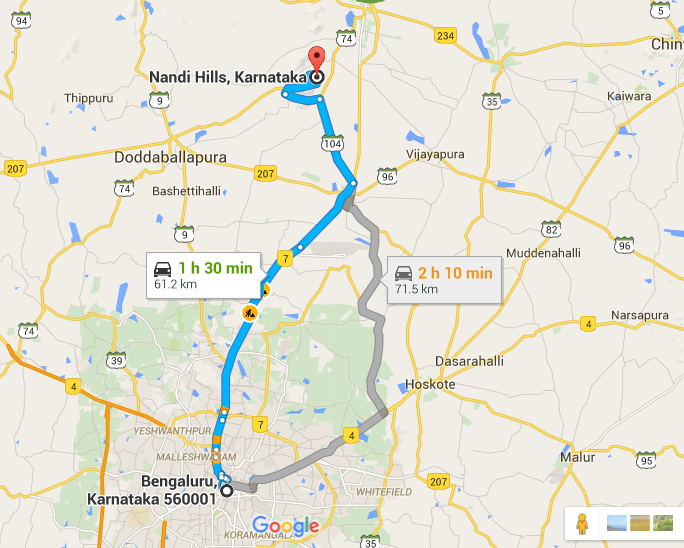
     A Trip To Nandi Hills 


So first I will tell you guyz what is this place all about,  
And here you go.....Nandi Hills is a place which is as beautiful as heaven(I think calling it like heaven will be justifying when u guyz will visit the place ). There are many stories about the origin of the name Nandi Hills. During the Chola period, Once upon a time Nandi Hills was called Ananda Giri meaning The Hill of Happiness. Another story is that Yogi Nandeeshwara performed penance here, and so it was named after him. A temple of Yogi Nandeeshwara is situated on top of the hill. Nandi is also commonly called Nandidurga Fort because of the fort build here by the ruler Tippu Sultan. It is also perhaps called Nandi Hills because the hill resembles a sleeping bull Nandi. There is a point called Tipu drop and guess what why it has been calling by that name.....well i am not going to tell :P, Go there and find by yourself :D


Morning vie of Nandi Hills

Perched at a height of 4,851 feet above sea level, Nandi Hills, a little over an hour’s drive from Bangalore, is an idyllic escape. The former summer retreat of Tipu Sultan, this ancient hill fortress is scattered with monuments and shrines and is a pleasant change from the humdrum of city life. Nandi Hills has been a favorite picnic place for young enthusiasts on a weekend.  The pleasant climate appeals to the old and the young alike. Lovers and honey mooners, in search of a quiet, beautiful place, and families on economised budget prefer Nandi 
Hills. Historians can find a wealth of information and the spiritual minded, peace and tranquility.


Entry gate for Nandi hills peak and fortress

Best part of nandi hills is you can go there in any month, you don't have to wait for any appropriate seasson. Climate of Nandi hills remains always same. But I must tell you timing matters alot. Best time for Nandi hills is morning because nothing can be more beautyful then the view of Sunrise from the top. Clouds will be touching your feet and the view of other peaks will be mesmerising.

Sunrise view
Important Note :
Be aware of monkies as they can snatch your icecream :P , because you cann't resist icecream at the peak of nandi hill.


For those people who love cycling this is best destination near Bangalore.  And riders even you people don't worry this is best even for riding that too in morning roads completely covered by fog.


How to reach Nandi Hills :


Basically it's a 1 day trip. Grab a cab from bangaluru, It will take around 2 hours to reach from any part of the city,just make sure you start your journey by 5 O'clock. 

Have your breakfast at the foot of Nandi hills with amazingly made filtered coffee.So guyz steal your 1 day from your busy schedule for yourself  and enjoy your trip to Nandi hills with icecream :P

Keep Riding..


Friday, 22 April 2016


World's Most Dangerous Roads between Kishtwar (Jammu & Kashmir) and Killar (Himachal Pradesh)


Mughal Road 


The road is 84km long between Bafliaz, a town in the Poonch district of Jammu & Kashmir to Shopian district in the Jammu & Kashmir. The road was historically used by Moghul emperors to travel and conquer Kashmir during the sixteenth century. It was the route used by Akbar the Great to conquer Kashmir in 1586, and his son Emperor Jahangir died while returning from Kashmir on this road near Rajouri. It passes over Pir Panjal Mountain range, at altitude of 11,500 ft. Pir ki Gali is the Highest Point on this road. (Pir Ki Gali). Apart from this it is an alternative road for travelling to Srinagar.


Sinthan Top

Sinthan Pass: The Sinthan pass connects Kashmir valley with Kistwar Valley. It is located at 12,500 ft and is snow-capped for most of the year. It is located on Srinagar – Anantnag – Kokernag - Kishtwar Highway.


Peer Ki Gali

Pir ki Gali is the Highest Point on this road at an altitude of 11,500 ft.


Worlds Most Dangerous Road

World’s Most Dangerous Road between Kishtwar (Jammu & Kashmir) and Killar (Himachal Pradesh). The road is so narrow that only one vehicle can pass at a time with numerous steep inclines and declines. This road gives access into Pangi Valley of Himachal Pradesh. The road is full of rocks, loose soil, etc, on one side there is 1000 feet freefall into the river Chandrabhaga and deadly mountain cliff hanging on other. The road condition is never constant, it sees many landslides. One mistake and it can turn out to be disaster. This road is featured into many travel forums as “One of the most Dangerous Roads in the World”. (Tyar to Sansari)

Chandra Taal

Chandrataal Lake: Chandra Taal (Lake of the Moon), is situated at an altitude of about 14,100 ft in the Himalayas. Mountains overlook the lake on one side, and a magnificent cirque presents a view on the other. It is motorable from Batal which is 14km away from Chandrataal in the state of Himachal Pradesh.


Kunzum Pass

Kunzum Pass / Top. A high mountain pass located at an altitude of 15,060 ft on Eastern Kunzum Range of Himalayas in the state of Himachal Pradesh. Kunzum Pass connects Lahaul Valley with Spiti Valley in Himchal Pradesh.

Komic

Komic, also known as the Highest Motorable Village in Asia located at an altitude of 14800 ft in Kaza District of Himachal Pradesh.

Kishtwar

World’s Most Dangerous Road between Kishtwar (Jammu & Kashmir) and Killar (Himachal Pradesh). The road is so narrow that only one vehicle can pass at a time with numerous steep inclines and declines. This road gives access into Pangi Valley of Himachal Pradesh. The road is full of rocks, loose soil, etc, on one side there is 1000 feet freefall into the river Chenab and deadly mountain cliff hanging on other. The road condition is never constant, it sees many landslides. One mistake and it can turn out to be disaster. This road is featured into many travel forums as “One of the most Dangerous Roads in the World”. (Tyar to Sansari)


Killar

World’s Most Dangerous Road between Kishtwar (Jammu & Kashmir) and Killar (Himachal Pradesh). The road is so narrow that only one vehicle can pass at a time with numerous steep inclines and declines. This road gives access into Pangi Valley of Himachal Pradesh. The road is full of rocks, loose soil, etc, on one side there is 1000 feet freefall into the river Chenab and deadly mountain cliff hanging on other. The road condition is never constant, it sees many landslides. One mistake and it can turn out to be disaster. This road is featured into many travel forums as “One of the most Dangerous Roads in the World”. (Tyar to Sansari) World’s Most Dangerous Road between Khillar (Himachal Pradesh) and Keylong (Himchal Pradesh). This road connects Pangi Valley with Lahaul Valley in Himachal Pradesh. There are numerous steep inclines and declines. On one side there is 1000 feet freefall into the river Chenab and deadly mountain cliff hanging on other. The road condition is never constant, it sees many landslides. This road is featured into many travel forums as “One of the most Dangerous Roads in the World”


Udaipur

World’s Most Dangerous Road between Khillar (Himachal Pradesh) and Keylong (Himchal Pradesh). This road connects Pangi Valley with Lahaul Valley in Himachal Pradesh. There are numerous steep inclines and declines. On one side there is 1000 feet freefall into the river Chenab and deadly mountain cliff hanging on other. The road condition is never constant, it sees many landslides. This road is featured into many travel forums as “One of the most Dangerous Roads in the World”


Tuesday, 2 February 2016

THE TRIP RIDERS LADHAKH MOTORCYCLE EXPEDTION 2K16


                 THE TRIP RIDERS LADHAKH  MOTORCYCLE EXPEDTION 2K16


        Ride To the land high passes


WHO WE ARE :-

The Trip Riders(P) LTD. is one of India's better known adventure tour operator, that specializes in adventure travel in the Indian Himalayas. Offering personalized itineraries  and  routes  you'd  be  hard  pressed  to  find  a more experienced, fun loving, safety conscious tour operator in India .If you've dream of a particular journey or an adventure in India, let us know. We'll make it happen. No matter how bizarre or wild or difficult.

Our team competitive monitors our range of tourism related industry to confirm that we offer the highest quality and most competitive product.


The Trip Riders team discovers, explores, meets people and brings out information on trekking trails in India. By information – we  mean  detailed  information  about  the trek – with maps, photographs and useful contacts. Wherever possible we bring you videos and audio experiences of people as they are hiking on a trail. Even with powerful search engines like Google information on trekking trails in our country is difficult to get. Apart from a handful of well-known treks – most trekking trails are unknown in our country.

Expedition Overview : 

In this tour of The Trip Riders, you will explore & experience the highest motorable road of 5,600 mtrs, visiting ancient Buddhist monasteries, Visiting Tibetan nomads with their caravan of Yaks and Pashmina goats on a Legendary Royal Enfield in Mountain Motorbike Tour. If you are a true thrill & adventure loving Motorcyclist enthusiastic & planning for Mountain Motorcycle ride with Highest Mountains Range then this Tour is the perfect for you. This Motorcycle Tour to Ladakh is highly recommended for every Motorcycle Rider at least once in a Life & adventurous moment of this Tour will remain forever in your memory which you never had so far, so come and experience the Land, where Sky & Earth Meet with THE TRIP RIDERS.. !!
Because bike ride to Leh, Ladakh passes through some of the most breathtaking, challenging and awe-inspiring landscapes found on Earth. But by any means it is not an easy ride since most parts of the road are at altitudes of 13,000 feet and above in the Himalayas. In addition, the number of miles one can cover in a day depends on the road and weather conditions .Our Signature motorbike tour is specially designed for people who want to see the beauty of Leh – Ladakh.  


Motorcycle checkup for Expedition:
Now that you have prepared your motorcycle for Ladakh Motorcycle Expedition 2k16, and are ready to start your ride Delhi, there are a few checks you need to perform before the D-DAY….!!!
  • Check if all lights, horn and indicators are working.
  • Double check fluid levels such as engine oil, brake oil and coolant (in case of liquid cooled motorcycles).
  • Check tyres for air pressure as well as look for any signs of puncture or damage.
  • Check if chain is lubricated properly and isn’t too tight or too loose.
  • Check for any leakages.


                                                        Detailed Itinerary

Day1:- Delhi to Jammu (577 kms)
Early morning wakeup call for the meeting point. Later, we flag off our epic expedition starts from Delhi to Jammu ride, a distance of about 577 kms. En-route we cross Ambala, Jalandhar and later drive through to Pathankot and reach to Jammu in late evening. 
During our ride, we stopover at for breakfast in kurukshetra and lunch in Jalandhar. After dinner, overnight stay in Jammu in a hotel. 

Day2:- Jammu to Srinagar (294 kms)
We leave Jammu after breakfast. The 294kms stretch to Srinagar takes approximately 11-12 hours. We will enjoy a tea break at Patnitop and lunch in Banihal. After, a full day ride we reach Srinagar. After dinner, overnight stay would be in a hotel.

Day3:- Sringar to Kargil via Zoji La Pass (210 kms)
Today we start the ride which you will remember for the rest of your life. We take it easy this day and ride on various terrain which we would encounter later on in tour. We reach Sonmarg by lunch - time, enjoying the alpine landscape and snow­capped peaks. After lunch, move towards kargil via Zoji La Pass. The first real test of the ride. Zoji La pass at 11,575 feet overlooks the beautiful mountains of Sonmarg on one side and the high altitude Ladakh region on the other. The constant landslides at the pass mean that we ride through slush and broken roads before we can set eyes on the brown landscape awaiting ahead.

The historic road from Drass to Kargil is a delight to ride on, with majestic views, green villages and raging rivers alongside. After dinner, Overnight stay would be in hotel.                                                                
 Day4:- Kargil to leh via Lamayuru(225 kms)
After breakfast we head towards Leh. We ride downstream along the River Indus on Leh – Kargil Highway. The striking rock sculpture of the Maitreya Buddha greets you at Mulbek soon after you depart from Kargil. Then you cross over two very beautiful passes, Namika La and Fotu La, before reaching the unique moonscape of Lamayuru. 

After spending some time at Lamayuru monastery, we continue the journey ahead to Leh. You will also visit Gurudwara Pathar Sahib, a beautiful Gurudwara constructed in the memory of Guru Nanak. After Dinner, overnight stay would be in hotel.

Day5:- Leh Acclimatization,  Local sightseeing
Today, you are on our own. It’s time for us to get acclimatized to the thin air, followed by an entire day at leisure in the capital city of Leh. You take a breather from the ride and rest at Leh. After a half day's rest you explore various parts of Leh, such as the local market, leh palace, monasteries and the Shanti Stupa.


Day6:- leh to Nubra Valley via Khardung la Pass (142 kms)
An early morning wake up, followed by Breakfast and checking our bikes and gear, we start our drive towards Nubra valley Via the world’s highest motorbale road- KhardunglaPass (5602 mts). After lunch, visit the main Diskit Monastery and the giant statue of Maitreya Buddha, this is the tallest Buddha statue in Ladakh. Later visit the white sand dunes at Hunder where you can enjoy the Double Humped Bactrian camel ride. The rest of the evening is free for leisure activities. Overnight stay would be in Guest house Diskit or Hunder. 

Day7- Nubra valley to Pangong Tso via Wari la Pass (230 kms)
Early wakeup call, after breakfast we will start our journey to the world’s highest salt lake (14272 ft.). 

Best Route of this Expedition 

The below route near to Wari La involves good amount of off roading with almost no road and a lot of water streams on the way. I am sure, any motorcycle rider will love this route. It is amongst my favorite trails in Ladakh as there are very less people, almost zero tourists, not at all developed, no roads, less Dhabas, no BSNL signals, no shops, no villages. Only you with some wild mules, horses, yaks, sheeps and a few distinct birds of Ladakh and the adhoc mountains with blue sky in background and cold water streams under you on the path or trail leading to Wari La.

Nubra Valley -Agham - Wari La - Sakti - Chang La - Durbuk - Tangste - Pangong tso

After today's hard core off road biking. Overnight stay be in camps at Pangong Tso lake.

Day8- Rest day at Pangong Tso for Photography 
Enjoy the beautiful panoramic view of lake. Situated at an altitude of 4,350 meters above sea level, Pangong Lake lies in the northeast of Leh. This famous blue blackish lake. Enjoy the landscape in the back drop of the Lake. This famous blue brackish Lake of Pangong is 5/6 Kms wide and over 144 Kms long with half of its running the other side of the "INDO CHINA BORDER". One rarely feels so close to nature and environment and the scenery is unforgettable.

Evenings are at leisure, followed by a grand theme celebration and dinner at Pangong Lake. Overnight stay in camps.  

Day9- Pangong lake to Leh (Rafting day) (150kms) 
This morning, after breakfast proceed for back to LEH. After lunch we move towards river rafting. Bonefire at night followed by Dinner. Overnight stay at hotel in LEH. 

Day10- Leh to Tso Moriri via Chumathang (240kms) 
Post Breakfast, we do a complete gear check and drive to Tso Moriri Lake. It is a breathtaking journey on a trail that is literally a ‘no man’s’ land.
Tso Moriri Lake has no outlet and the waters are consequently brackish, although not very perceptible to the taste. The water is crystal clear and of a deep blue color. This Day will cover Thicksey, Hemis and Shey monasteries while going through this route. Overnight stay at hotel.


Day11- Tso Moriri to Jispa(317kms) 
An early wake up call, followed by a stroll around and Breakfast, we start our ride back to Manali with our 1st overnight hault at Jispa. Jispa, in Himachal Pradesh lies at 3319 m (10,890 feet) on the bank of the Bhaga River, whose waters lull you to sleep at night. Mudhouses and Buddhist chortens complement the serene cape.
As the sun descends, the evening welcomes you to the warmth of the campfire. Overnight at the hotel.

Tso Moriri (Karzok) – Sumdo – Tso Kar (105kms)
Tso Kar Lake - Jispa (212 Kms)


Day12- Jispa to Manali via keylong (137kms) 
We start our day early and our ride from Jispa to Manali. The route is slightly rough, so this day we shall try and cover the maximum distance with minimum stopovers. We arrive in Manali by the evening. Over Night stay in a hotel.

Day13- Expedtion farewell party in Manali and Paragliding day
Enjoy the lazy morning in Manali. Before lunch do Paragliding in Solang valley. In Evening, we celebrate farewell party of The Trip Riders Ladakh Motorcycle Expedetion 2K16. 

Overnight stay in hotel.

Day14- Manali to Shimla (240kms) 
This is the final leg of our ritual road trip. We will leave Manali in the morning after Breakfast. We will take the road towards Shimla from here, via Sundernagar, Kullu valley & Mandi. By evening we will reach Shimla. Enjoy your evening on Mall Road Shimla. After dinner overnight stay in hotel. 

Day15- Shimla to Delhi (360kms) 
This is the last day of our ride. Post breakfast we start are journey back to Delhi. 

Package Inclusions: -

  • Accommodation in well appointed 3 star or equivalent hotels on Twin sharing Basis.
  • Inner Line Permits and Wildlife fees for restricted areas for Indian Nationals.
  • Petrol throughout the expedition. 
  • Basic First Aid Kit & medicines
  • Services of a Royal Enfield trained specialist mechanic for the full duration of the trip.
  • Theme Dinner Celebrations at Pangong Lake.
  • Use of equipment and the services of trained guides and professional.
  • Dedicated trip leader, certified in First Aid and CPR from NOLS, USA throughout the trip.
  • Back up Utility Vehicle including luggage transfers.


Package Exclusions: -

  • Any expenses incurred due to Force Majeure
  • Any Travel expenses from Delhi.
  • Personal expenses like Telephone, Laundry, Tips and Table Drinks etc.
  • Any item not mentioned in the inclusions

Other TERMS AND CONDITIONS: -

  • 100% Payment in advance.
  • The program schedule, route, or mode of transport might be changed due to unforeseen circumstances or for the safety of the group.
  • In case any participant falls sick during the tour, the expenses for medical treatment, travel & porter charges etc. will be borne by the concerned individual.
  • During the tour, the decision of the Program Director and/ or the Field director will be final and binding.
  • The Trip Riders shall not be held responsible for any accident, illness and loss of valuables or such other unforeseen events during the tour.

Expedition Pricing:- 

COST PROPOSAL FOR 15 DAYS 14 NIGHTS WITHOUT MOTORCYCLE - 35,000/-PER PERSON 

COST PROPOSAL FOR 15 DAYS 14 NIGHTS WITH 500cc Royal Enfield - 50,000/-PER PERSON 

All Taxes are included. 

For Reservation:-
Call us on +91 8860832239, 9999028311
Write us on akashvats12@gmail.com for any query 


  Happy Riding....!!!


Monday, 1 February 2016

Spiti Valley "The Middle Land" Expedition

One more addition in our Trip Diary


Well generally I start sharing my experience with a very gentle introduction but for Spiti Valley I can't resist myself saying that Hell yes I got the place I was searching for last so many years, full of adventures in the lap of Himalayan mountains you gonna see unbelievable scenarios of mother nature. It is situated in Himachal Pradesh. Spiti valley is known for majestic climate and scenic places around it.
The Land Between Tibet And Ladakh Is The Off Beat Tourism Destination In Himalayas. For Centuries People In These Remote Valleys Lived Largely Isolated From One Another, Holding And Preserving the Treasures And Secrets Of Ancient Civilizations Untainted By Modernity Unmatched Outside These Mountains. Spiti valley is a research and cultural center for Buddhism. There are about 30 big and small monasteries spread over the Spiti valley. The most famous of all are the mystical Kee monastery at Kaza (which is the biggest monastery), precariously perched atop a craggy cliff- Dhankar monastery, the frescoes and stucco statues of Tabo monastery (which is the oldest monastery in the whole Himalayas – 1012 years old), Kungri monastery (in the Pin valley). Most common wild animals found here are – Yak , the largest animal found in Himalayas, Bharal – known as the Himalayan blue sheep, snow ibex, Himalayan golden eagle and the Snow leopard which is found at a height of above 5,000 metres. 


"But if compared to Ladakh, Spiti valley is still very harsh and desolate. It takes a certain amount of madness to drive on these uninviting, mesmerizing landscapes. And to do it solo – you need to be more than just mad. When I decided to drive solo, through this unfamiliar terrain of East Himachal – home to one of the ‘world’s deadliest roads’ – my sole intention was to see its natural vistas and being careful of every step."

Spiti is accessible by road round the year and requires you to travel a total distance of 700 to 800 kms, depending upon what all places you want to visit on the way. I travelled from Delhi to Shimla to Kaza to Delhi . You can also complete the journey the other way round– by starting from Manali, and following the tribal circuit, until you reach Shimla. But personally, I’d advise you to start from Shimla for a couple of reasons. First, if you start from Shimla, it would be easy for you to acclimatize to high altitude without a sudden discharge. Second, this way you won’t need to obtain a permit to cross Rohtang Pass, which you otherwise do if you initiate the journey from Manali. Obtaining the permit means spending extra money and killing one or two days in the DC’s office, in Manali

Day 1: Noida to Shimla (8 Hours; 394 Kms): 

We started our journey from Noida with 2 bikes Desert Strom and Thunderbird, We headed towards Amrik Sukhdev Dhaba for our lunch which is in Murthal and trust me starting your journey from there is as good as it's lassi and parathas , after having hell lot of parathas we started our journey for Shimla. It was a bit stormy day so we started very slowly and in 5 hours we were in beautiful valleys of Shimla. We had a very tight sleep that night and know first day is always tiery :D.


Day 2: Local Sightseeing Day in Shimla : 

We enjoyed the lazy morning at shimla. Nothing can be more beautiful then the morning scenery of Himalayas. We started our day with Tea and Paratha's and a carnival was there on the Mall Road. So we joined the carnival and had some local dishes over there then we had some sight seen in Shimla and finally at night we had a house party with our local friends :D


Day 3: Shimla to Reckong peo(8 hours; 248 kms):


This day was the starting of our adventure side. Our targeted destination was Reckong peo roads were hell awesome and hospitality of local people was mind blowing, our first stop was Narkanda (64KMs from Shimla). We got some problems in our bike chains so we decided to check it in Narkanda. After that we lead towards Rampur and now we needed to be refueled ourselves. So we had fresh sugarcane juice and then we headed for Reckong Peo. It was a memorable moment for us when we saw the starting point of kinnaur district. No one can describe the beauty of that scenery in words, it was just flow-less. And after a long day ride we reached Reckong Peo. We were nicely welcomed over there.
Weather was damn awesome and the best part was when local people of Peo asked us that "guys will you people go back from here, we replied no we will go to kaza and they were literally shocked and said you will find nothing in kaza even we don't go there :P. And our reaction was like ohk ohk frnds see u then a big bbyeeeee. We stayed in a hotel named (farryland). It was cheap and best. Food was Delicious. 


Day 4: Reckong peo to Tabo (7 hours; 158 kms):

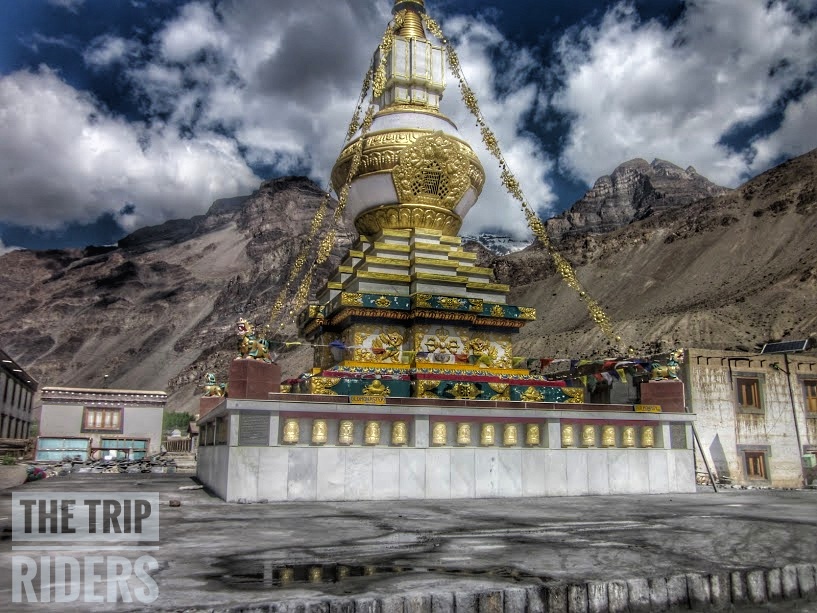
We woke up slightly late in the morning. After got ready we saw some dhabas near bus stand for breakfast. Our 4th day target was Kaza but we already late. We refueled our bikes with petrol in Reckong peo. Just after Peo next 25 kms was like mind blowing. Roads were too narrow and full of stones towards Spillow. Our best experience started from here and trust me that was the starting of all the thrills. We clicked some nice pics there in between so many amazing places like Spillow and Pooh. In Pooh we met Indian Army soldiers of Bihar regiment. Road after Pooh to Nako was amazing and the best part was Satluj river following the route side by side. The Road was incredible awesome when the kah loops starts from the Bridge. After 6 hours ride we reached Nako. We met local people of Nako and they were very nice and gentle.  After a 1 hours break we headed towards Tabo. We Stuck in a double landslide between Nako and Sumdo in Spiti, Rocks boulders all rocketing down. And yes the most Important thing Mobile network is not available after Rekong Peo except BSNL , So carry a BSNL sim with u. After 4 hour ride we reached Tabo. We went to Tabo Monastry which is very beautiful and has very deep and huge history with it. There we stayed in a mud house and it was a nice experience. We met here a lawyer from noida is travelling solo from 25 days in Spiti from local transport.  We had dinner and again time for a tight sleep.


"The Tabo Gompa, or Buddhist monastery, is second in importance only to the Tholing Gompa in Tibet in the entire Himalayan region. It was developed as an advanced centre for learning by the great teacher and translator Lotsawa Rinchen Tsang Po, the king of western Himalayan Kingdom of Guge -- also known as Lha Lama Yeshe O'd or Mahaguru Ratnabhadra. The Chos-Khor at Tabo remained one of the most important Buddhist establishments during the time of Lotsawa after the Chos-Khor at Tholing, the capital town of Guge. It is known that the Chos-Khor at Tabo commanded great importance, and hosted for a considerable period, many great scholars and translators in the Buddhist history studies. To date, it is the preserver of the Buddhist Legacy and is one of the most important Gompa of the entire Tibetan Buddhist world.

Day 5: Tabo to Kaza ~Excited Mode Activated~(3 hours; 54 kms):


Woke-up early this morning and had a very delicious breakfast in monastery.  So this day we were so much exited because our target was kaza :D. and we got a straight road which was very close to river and it was so fascinating for us. We reached kaza after 3-4 hrs ride and our motorcycles needed some primary checkup , we stayed in Hotel Deyzor and at that time it was like feather in a crown. We just threw our bags there and rushed for Key Monastery and trust me that excitement was completely worthy, View was breathtaking and Key Monastery was looking so beautiful. The spectacular monastery is located at an height of 4116m and 7 km from Kaza. It is the largest monastery in Spiti Valley and established in the 11th century has ancient Buddhist scrolls and paintings. It also has houses large number of Buddhist monks and a cafeteria. I guess this much detail will be enough for now. From Key we went to Kibber.


"KIBBER village is located at an height of 4205m and 18 km from Kaza and is believed to be highest motorable village in the world. The village is known for its scenic landscape and numerous Buddhist Monasteries. Situated at an elevation of 4850m, Kibber is resembles to the villages of Ladakh and Tibet.According to 2011 census, there are 77 houses in the village and about 187 men and 179 women reside here".

I read about Chandratal lake (d lake of moon) a few years back, and from that moment on it’s always been on top in my bucket list. Nothing can be more soothing and rewarding than admiring the bounties of nature and that too by doing a trek to a place which is still unaffected by the ever-increasing endeavors of human beings.


We want to do Chandratal lake too but that time road was not accessible from KUNZUM PASS so it was a very bad feeling for us but we can't miss this moment. So we decided to submit Chandertal Lake trek. From Tashi Zom Guest House we got a phone number for our Chandratal trek guide. We stayed in Kibber  for 2-3 hrs, played Gali-cricket with kids. It was worth spending time in Kibber. We headed back to kaza and met Jamaica(the guy whose number we got in Tashi Zom Guest House Kibber). He suggested us to acclimatize first then start trek for Chandratal Lake. Suddenly 3 trekkers came from the same trek but they was not submitted Chandertal lake :D. For a moment we feel very bad for them but now its our turn to submit Chandertal Lake. After getting some information from those Guyz we left for Kaza market to purchase some packed food and gum boots because its a snow trek so we can't take any risk while trek. 

In Evening, we back to the hotel with some party stuff because we planned a small party time for ourselves, u know what i mean :P. Deyzor is best hotel in kaza, for sure.Amazingly done feels just like home. Small small things like quotes on table, walls. Various Deco items. No words to describe. Thoroughly enjoyed the stay. Karan Singh Bedi, you are an inspiration to many and kudos to you for creating this little heaven!. After enjoyed delicious food we gone sleep.

Day 6: Kaza to Komic to Losar (4 hours; 120kms )

After getting ready in morning, we planned to visit Komic village the highest village in ASIA and highest post office in WORLD. We were excited to see all those places. A monastery was there and lama was very friendly, they offered us food and tea. We were so happy because we din had breakfast and thought we will get maggi in comic bt no shop was open there. so we had our lunch there. And we spent some quality time with lamas. Place was so beautiful, all peaks were right in front of our eyes and small beautiful houses like patches in velvet. After spending 2/3 hours in komic, we leave for kaza because we have to reach Losar by evening. 


Jamaica arranged all essential things for us with a local guide. That guide(Dorzy) arranged our night stay in his own house. There was mind blowing curves in the way. View was mesmerizing , we got some straight roads also :D. Deserted mountains caped with snow was looking amazing. We also got some water logging on the roads. We reached Losar in 3 hours ride. We got a warm welcome from Dorzy's family. And the traditional drink (PIYO) and dinner (TECHA) was waiting for us. After having dinner we gone sleep. 


Day 6: Losar to Kunzum Pass to Chadertal lake (10 hours; 30kms)

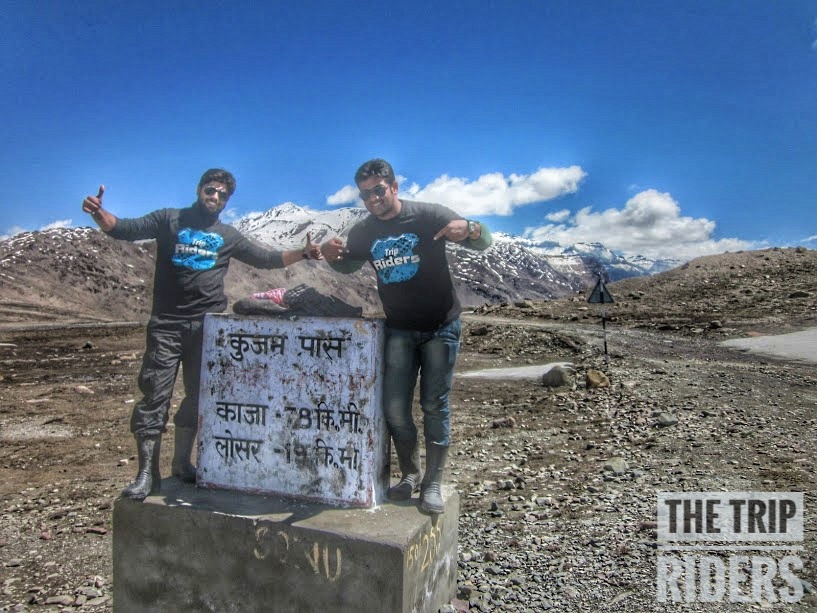
We geared up for Kunzum pass and our ultimate destination Chandratal lake. And i can't describe the beauty of the roads while going there, full of water logging :P, view was breath taking. Finally we reached Kunzum pass situated at 4,551 m above mean sea level, Kunzum La or Kunzum Pass is one of the gateways to Lahaul and Spiti valleys. It is one of India’s highest motorable mountain passes situated in Himachal Pradesh. Spiti and Lahaul valleys has been separated, it is situated at a higher altitude than Rohtang Pass, which is at an elevation of 13,054 ft and also serves as another gateway to Lahaul and Spiti.


Popular with tourists visiting Lahaul, Spiti and Manali, Kunzum Pass offers spectacular views of Bara-Sigri, the second longest glacier in the world.  Also visible from the top of the pass are the Chandra-Bhaga mountain and Spiti valley. The presence of chortens and prayer flags signify a strong Buddhist influence in the area.
Also popular, is the Kunzum Devi Temple where all vehicles must stop to pay respects to the goddess. After finishing our prayer we parked our bikes beside the temple and started treking towards Chandratal lake. Trust me it was life time experience for me, walking on glaciers was breath taking.


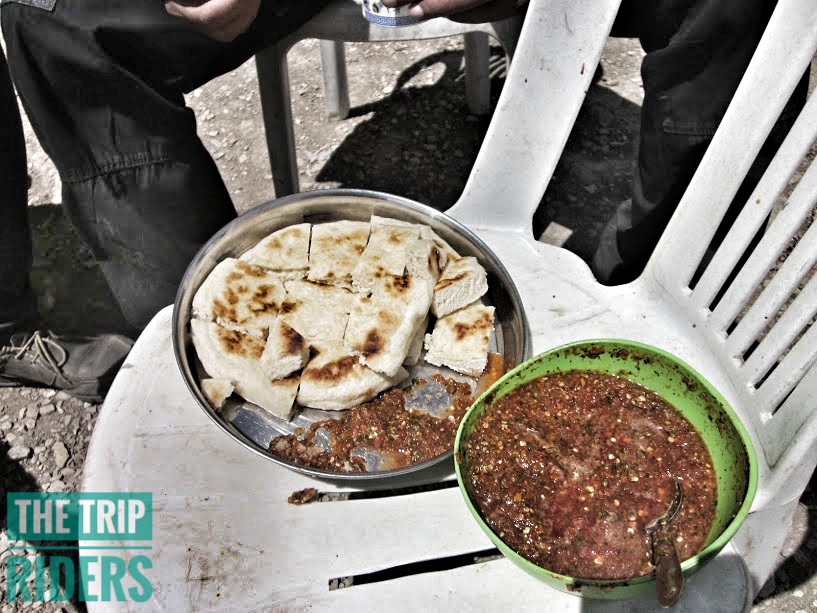
The scenic view was amazing. We felt like only we four left on this earth, so quite, completely isolated. After 3 hours of continuous but very slow walk we stopped for rest and we all were damn badly hungry ;). We got some boiled egg and boiled potato with us and i wont forget that 1 inch thick bread :P . Again we started our trek. I can't elaborate my experience of trek in words for that even you people should also do it once. We completed our trek in 6 hours. And the moment when we saw Chandartal lake first time we understood why it is called Lake of Moon. It was so beautiful with crystal clear water, Now i will introduce Chandratal lake :P

"Chandratal, located in the Lahaul and Spiti district of Himachal Pradesh, is a 2.5-km wide fresh water lake. At a height of around 14100 feet above sea level, the lake is surrounded by scree, and brown mountains, which in the winter season turn white. The huge cirque here offers a magnificent view of the lake and far off snow-clad peaks of the Himalayan Mountain Range; thus, making it a paradise for photographers."

"As its shape is more like a crescent, hence called “Chandra” while the word “Tal” stands for a lake. The Anglicized version of this Himalayan splendor is Moon Lake."

What was its past?


There are many stories related to Chandratal, one of which says that it was a resting point for traders heading towards Spiti and Kullu Valleys. According to another legend from the epic Mahabharata, it is the same location from where Yudhishthira, the eldest of the Pandava brothers, was taken to Swarga (heaven) by Lord Indra. As a result, the lake is also visited by a number of devotees. The most interesting part is that the locals believe it to be blessed, and visited by fairies at night.

We arranged our camp just beside the lake. And in the mean time snow fall started. you know I can undoubtedly say that it was gateway of heaven. We forgot our tiredness when we saw our surrounding. I bet no one can forget that scenic view. We eat maggie made by Dorje and take some rest in our tent. After took some pictures we get back to the tents. After dinner we opened our sleeping bags and start fighting with cold. It was a different experience for us on such altitude. One thing more that forget to mention "We are first trekkers of 2015 who submit Chadertal Lake". 

Day 7: Chadertal Lake to Losar (9 hours; 30kms)

We woke-up at 5 am in the morning. We find that our tent is covered with snow. The lake was covered with white snowy mountains. we walked slowly, eager to catch the first glimpse of the lake. There it was, cradled in the lap of the mountains – dazzling blue and unreal. Prayer-flags fluttered in the strong wind. For a while I just stood mesmerized at the sight. It was such a pure turquoise. I looked up at the sky. After took some pictures we headed back to Kunzum pass where we parked our bikes. 


Suddenly snow fall started, we moved quickly as we know that "bad weather can be worse anytime ". 
  
After reaching Kunzum Passs we had tea break over there and moved towards Losar.
We are very happy that we submit Chandertal lake trek. We reached Losar on the same home-stay where we stayed before.

Next day, we moved back to home with lots of memories.  #thetripriders

Trip Time - 11 Days
Total Cost Person - 11300 rs
Distance in Kilometers - 2743 kms

Happy Riding ...!!!


Detail :- 


Spiti, also known as the “Middle Land”, is a trans- Himalayan terrain located in the north-eastern part of Himachal Pradesh in India. The name “Spiti” means “The Middle Land”, i.e. the land between Tibet and India. Spiti valley is a place. Spiti valley is home to some of the oldest monasteries (Tabo, Sherkhang and Dhankar- all around 1000 years old), highest motorable villages in Asia (Langza and Komic), highest post office in the world (Hikkim), Chandrataal lake, beautiful and vast landscape, ancient and intact culture and simple people. Spiti valley possesses a distinctive Tibetan Buddhist culture similar to that found in Tibet and Ladakh region of India.
Along the northern route from Manali or Keylong via the Rohtang or Kunzum Pass respectively, the valley lies in the North East of the Indian hill state of Himachal Pradesh, and forms part of the Lahaul and Spiti district.
The sub-divisional headquarters (capital) is Kaza, Himachal Pradesh which is situated along the Spiti River at an elevation of about 12,500 feet (3,800 m) above mean sea level. Spiti valley is a research and cultural centre for Buddhists. Highlights include Kye Monastery and Tabo Monastery, one of the oldest monasteries in the world and a favorite of the Dalai Lama. It was the location of the spectacular scenery and cinematography in the Indian films Paap and Milarepa, a biographical adventure tale about one of Buddhism’s most famous Tibetan saints.
The Buddhist monastery in the valley served as the locus of the set and some of the monks appeared in the film. The Pin Valley of Spiti is home to the few surviving Buchen Lamas of the Nyingmapa sect of Buddhism. Spiti is summer home to hundreds of semi-nomadic Gaddi sheep and goat herders who come to this valley for grazing their animals from the surrounding villages and sometimes as far as 250 km. They enter the valley during summer as the snow melts and leave just a few days before first snowfall of the season.


"On the best places on Earth. Untouched & Serene."